 0.5ミリ先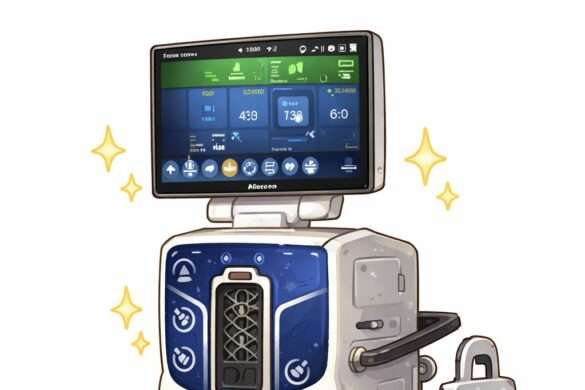

Alcon introduced its next-generation surgical platform, Unity™ VCS, at the 2025 Japanese Society of Ophthalmology.
While the device is often discussed in terms of performance upgrades,
in Japan, the conversation quickly shifts to a different question:
“Will this actually work in our system?”
もくじ
- In Japan, adoption is not about features — it’s about sustainability
- The structural difference: cataract vs vitrectomy
- Why “all-in-one” sounds attractive — but can be risky
- The common pitfall: “just in case” decisions
- Before choosing the device, define the model
- ▶ How Japanese clinics actually evaluate adoption
- Conclusion
In Japan, adoption is not about features — it’s about sustainability
Unity VCS delivers clear technical improvements:
- 4D Phaco for efficient lens removal
- Up to 30,000 cpm cutter speed
- Active Sentry + temperature sensor
- Multi-pump fluidics system
However, in Japanese clinical settings,
these features are only the starting point.
👉 What truly matters is:
- Case volume
- Procedure mix (cataract vs vitrectomy)
- Operational efficiency
- Cost structure (including consumables)
The structural difference: cataract vs vitrectomy
One key context in Japan is the difference between cataract-only clinics and those performing vitrectomy.
This is not just a matter of adding equipment.
Vitrectomy requires:
- Additional imaging systems
- Longer operation time
- Skilled staff and workflow adjustments
- Gas management and postoperative considerations
👉 In other words, it is a different operational model
Why “all-in-one” sounds attractive — but can be risky
Unity VCS is positioned as an integrated system.
From a technical standpoint, this is a major advantage.
But in practice, Japanese clinicians often question:
- Will both functions be used enough?
- Will integration improve efficiency — or reduce it?
- Is the increased cost justified by actual usage?
👉 Without clear answers, integration can become overinvestment
The common pitfall: “just in case” decisions
A typical scenario in Japan:
- A clinic is strong in cataract surgery
- Considering future expansion into vitrectomy
- Decides to introduce equipment “just in case”
This often leads to:
- Underutilized equipment
- Increased fixed costs
- No actual expansion into vitrectomy
👉 The issue is not the device — it’s the decision structure
Before choosing the device, define the model
In Japanese practice, the order is clear:
- Define case volume and surgical model
- Confirm surgeon availability and workflow
- Then evaluate the device
Not the other way around.
▶ How Japanese clinics actually evaluate adoption
Rather than asking “Is this device good?”,
the key questions are:
- Will this generate sustainable revenue?
- Can we maintain a stable surgical system?
- Does this improve our core cataract practice?
👉 If these are unclear, adoption is usually postponed
Here are common failure patterns in introducing vitrectomy surgery, along with practical decision criteria based on real cases.
硝子体手術の導入で起こりやすい失敗パターンや、
判断基準を実例ベースで整理しています。
▶ noteはこちら
Conclusion
Unity VCS represents a significant technological step forward.
But in Japan, adoption is rarely driven by technology alone.
👉 The real question is not:
- “Is this a great device?”
But:
- “Does this fit our operational and financial model?”
Understanding this difference is essential to interpreting how new surgical platforms are actually adopted in Japan.